Skip to content

Out Law Magic products are coming soon

Products Coming Soon Contact Us
OLM Out Law Magic Premium magic shop

A Weekend of Magic with Cagliostro — Assienda Forest | July 23–25, 2026

Imagine waking up in a forest, surrounded by mystery — and Cagliostro waiting to astonish you.

This July 23–25, Israel’s most celebrated magician brings his full team to the Assienda Forest Resort for an unforgettable family weekend.

Magic at Assienda Forest

The Program

Thursday

  • 16:00–17:30 — Magical welcome: interactive stations, live magic demos
  • 20:30–21:30 — Evening show: Family Secrets — immersive, interactive magic
Magic show

Friday

  • 11:00–13:30 — Magic School Workshop for children ages 6+
  • 15:00–16:00 — Practice session
  • 21:00–22:15 — Mentalism show
Magic workshop for kids

Saturday

  • 10:30–11:45 — Young Magicians Show — kids on stage! Certificates awarded

Book the Weekend Package at Assienda Forest

Tel: +972-9-7460957 | outlawmagic.com | hakosem.co.il

The Art of Mentalism: Mind Reading and Cold Reading Explained

Mentalism is the branch of magic that deals with the mysteries of the mind. Unlike traditional magic, which relies on physical props and sleight of hand, mentalism creates the illusion that the performer has genuine psychic abilities — reading thoughts, predicting the future, and influencing decisions. It is one of the most powerful and personal forms of magical performance.

What is Mentalism?

A mentalist appears to demonstrate extraordinary mental abilities: mind reading, telepathy, precognition, and psychokinesis. The effect is achieved through a combination of psychological techniques, subtle observation, suggestion, and carefully designed props. When done well, mentalism does not feel like a trick — it feels like a genuine, inexplicable connection between two minds.

Mentalism vs. Traditional Magic

Traditional magic says “look, my hand is faster than your eye.” Mentalism says “I know what you are thinking before you say it.” The difference is intimacy. A mentalist performs with minimal props and maximum connection. While a stage magician might produce a dove from thin air, a mentalist will correctly name the word you thought of on page 47 of a book you chose at random. The experience is far more personal — and often far more unsettling.

How Cold Reading Works

Cold reading is a set of techniques used to gain information from a person without them realizing they are providing it. A skilled cold reader picks up on physical cues — clothing, posture, accent, jewelry, micro-expressions — and combines them with high-probability statements to appear to “know” things they could not know. The technique relies on the fact that most people are surprisingly similar in their fears, hopes, and life experiences.

The Barnum Effect

The Barnum effect (also called the Forer effect) is the psychological phenomenon where people accept vague, general statements as specifically true about themselves. Statements like “you sometimes doubt yourself, but you have hidden strengths others do not see” feel uniquely personal, yet apply to almost everyone. Skilled mentalists combine the Barnum effect with specific observations to create an overwhelming sense of accuracy.

Building a Mentalism Act

A strong mentalism act has a clear narrative arc. Open with something impossible but immediate — a prediction in a sealed envelope, perhaps. Build through increasingly personal and specific effects. Close with something that leaves the audience genuinely questioning what just happened. Every effect should feel like proof of the same underlying ability, not a random collection of tricks.

Essential Mentalism Props

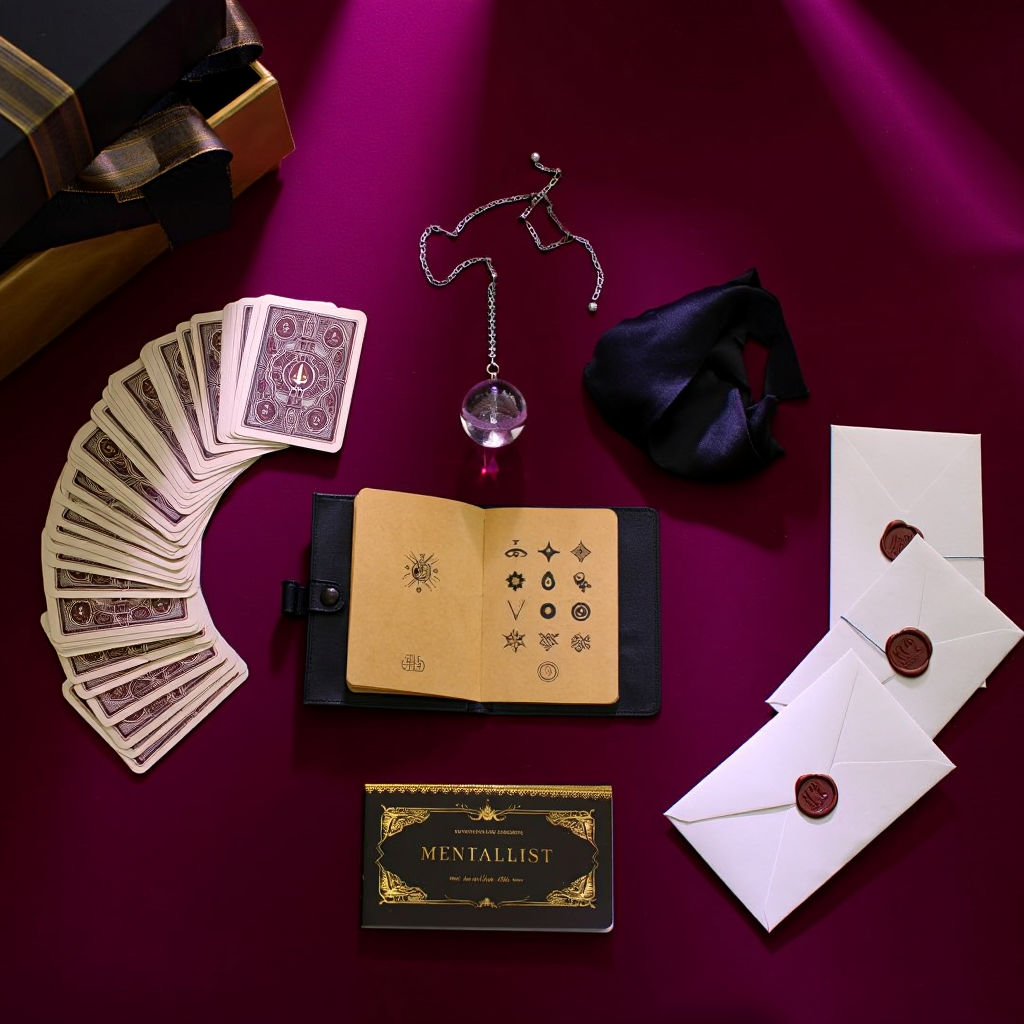
The right props are crucial to a convincing mentalism act. Zener cards (the classic symbols used in ESP experiments) create instant credibility and visual interest. A pendulum is a simple yet powerful prop that appears to respond to subconscious thought. Prediction envelopes — sealed before the show — are one of the strongest formats in mentalism because they are verifiable and tangible. Blindfolds, center tears, and one-ahead envelopes are other staples of the working mentalist.

Famous Mentalists to Study

To understand what great mentalism looks like, study the masters. Derren Brown is the gold standard of modern mentalism — his television specials and live shows are essential viewing. Max Maven is the intellectual godfather of contemporary mentalism, with a style that is both eerie and cerebral. Theodore Annemann, though performing in the early twentieth century, wrote the definitive mentalism text that still influences performers today. Uri Geller, controversial as he is, brought mentalism to a global audience.

Ready to explore the world of mentalism? At Outlaw Magic, we carry a full range of mentalism props, including Zener card sets, prediction envelopes, pendulums, and instructional books by the masters of the craft. Whether you are building your first mentalism act or adding a new dimension to an existing show, you will find everything you need in our store.


Street Magic Secrets: How to Perform Anywhere, Anytime

Street magic is the rawest, most exciting form of the art. There is no stage, no curtain, and no safety net — just you, a crowd of strangers, and the pure electricity of an impossible moment. If you want to perform anywhere and leave people genuinely astonished, this guide is for you.

The Psychology of Street Performance

Street magic works because it happens in the real world, surrounded by people who did not sign up to be fooled. That context makes everything more powerful. Before you worry about which tricks to perform, understand the psychology: people want to be amazed. They may act skeptical, but deep down they are hoping you will show them something they cannot explain. Your job is to give them that experience safely and confidently.

Choosing the Right Tricks for the Street

Not every trick works on the street. You need effects that are visual, immediate, and can be performed surrounded. Coin magic, bill tricks, rubber bands, and close-up card work are street magic staples. Avoid anything that requires a table, a specific viewing angle, or extensive setup. The best street tricks look like they happen in the spectator’s hands — not yours.

Performing for Strangers: The Opener

Stopping a stranger is an art in itself. A strong opener gets instant attention and buy-in. A coin that vanishes from your open palm, a rubber band that visually jumps from finger to finger, or a simple prediction that comes true in seconds — these are the kinds of openers that make strangers stop walking and start watching. Keep your opener under 30 seconds and make it visual enough to attract a crowd.

Managing a Crowd

Once you have a small group watching, the dynamic changes. Use the crowd to your advantage — involve multiple spectators, play people off each other, and use the social proof of others watching to attract more. Speak loudly enough for everyone to hear. Position yourself so the trick is visible from multiple angles. Never let the crowd control you; you control the crowd.

Handling Hecklers

Hecklers are part of street magic. The best response is almost always to stay calm and confident. Acknowledge them with humor, involve them in the trick, or simply move on. Never argue, never explain, and never reveal your method under pressure. A confident magician who handles a heckler gracefully earns more respect than one who performs flawlessly without opposition.

What to Carry in Your Street Magic Kit

Your street kit should be lean and always ready. A standard deck of cards, a few coins of different sizes, rubber bands, a Sharpie, and one or two special gimmick props are all you need to perform for an hour. Keep everything in your pockets or a small pouch. The best street magicians can walk out the door with nothing and still perform miracles.

Building a Reputation

Consistency is how you build a reputation on the street. Perform regularly in the same locations, treat every spectator with respect, and always leave people with a positive memory. Word of mouth spreads fast. Some of the world’s most famous magicians — David Blaine included — built their careers entirely on street credibility before ever appearing on television.

Whether you are just starting out or looking to upgrade your street kit, Outlaw Magic has everything you need. From reliable gimmick coins and cards to professional-grade rubber band routines, our store is stocked with the tools that working street performers actually use. Stop by and gear up for your next performance.

The Best Magic Kits for Kids in 2025: A Parent’s Guide

Magic is one of the most powerful gifts you can give a child. It builds confidence, sharpens problem-solving skills, and teaches the value of practice. But with so many magic kits on the market, how do you know which one is right for your child? This guide breaks down everything you need to know before buying.

Why Magic is Great for Kids

Learning magic is about much more than pulling rabbits out of hats. When children perform magic, they develop fine motor skills, improve their memory, and learn how to communicate in front of others. Every successful trick is a small victory that builds self-esteem. Many professional performers and even Silicon Valley entrepreneurs credit childhood magic as a formative experience that shaped their creativity and confidence.

What to Look for in a Quality Magic Kit

Not all magic kits are created equal. A good kit should include clear, step-by-step instructions that a child can follow independently. The props should be durable enough to survive repeated practice sessions. Look for kits that teach real principles of magic rather than just one-use gimmicks. A well-designed kit grows with the child, offering tricks of varying difficulty.

Age-Appropriate Recommendations: Ages 5 to 7

For young children, simplicity is key. Look for kits with large, easy-to-handle props and tricks that can be performed after just a few minutes of practice. Color-changing scarves, foam balls, and simple card tricks with marked cards are perfect for this age group. The best kits for this age come with picture-based instructions and require no reading. The goal is fun and wonder, not technical mastery.

Ages 8 to 12: Building Real Skills

By age eight, children have the dexterity and focus to learn genuine sleight of hand. This is the sweet spot for magic education. Kits for this age group can include a proper card deck with an instruction booklet, rope magic, coins, and linking rings. Look for kits that include a performance guide — teaching children not just how to do the trick, but how to present it with storytelling and showmanship.

Teen Magicians: Going Pro

Teenagers who are serious about magic are ready to move beyond kits and invest in individual props, books, and instructional videos. A professional card deck, a beginner mentalism prop set, and a classic book like “Mark Wilson’s Complete Course in Magic” make excellent gifts. If your teen is passionate, consider enrolling them in a local magic club or online course where they can learn from working professionals.

Safety Considerations

Always check age recommendations on kits and avoid anything with sharp edges, fire, or chemicals for younger children. Many kits include small parts that are choking hazards for children under three. For families with multiple age groups, store advanced kits out of reach of younger siblings.

The Confidence Factor

Perhaps the greatest benefit of learning magic is the confidence that comes from mastering something difficult and performing it for others. Children who perform magic learn to manage nerves, think on their feet, and recover gracefully when things go wrong — all skills that serve them for life.

At Outlaw Magic, we carry a wide selection of age-appropriate magic kits, starter props, and instructional materials for young magicians of every level. Browse our collection and find the perfect kit to spark a lifelong love of magic in the young performer in your family.

How to Master Card Magic: The Complete Beginner’s Guide

Card magic is one of the most accessible and rewarding forms of magic you can learn. With just a single deck of cards, you can perform miracles that leave audiences speechless. Whether you are picking up your first deck or looking to sharpen your skills, this guide will walk you through everything you need to know to get started.

Getting Comfortable with the Cards

Before learning any tricks, you need to get comfortable simply holding and handling a deck. Practice squaring the deck, spreading the cards in both hands, and doing a basic riffle. The goal is to make the cards feel like a natural extension of your hands. Spend at least 15 minutes a day just handling a deck — it makes a world of difference.

The Overhand Shuffle and Shuffle Control

The overhand shuffle is the most common way people shuffle cards, and it is the first shuffle every magician should learn to control. A shuffle control means you can shuffle the deck while secretly keeping a chosen card in a specific position — usually the top or bottom. Practice running the cards slowly and injecting a card back exactly where you want it. With time, this becomes second nature.

The Bridge Shuffle

The bridge shuffle (also called the riffle shuffle) looks incredibly impressive and gives you a lot of control over the deck. Split the deck into two halves, let the corners fall together, and push them into each other. It is more advanced than the overhand shuffle, but once mastered, it adds tremendous visual flair to your performances. Many pros do a false bridge shuffle that appears to mix the cards while keeping the order intact.

Learning the Double Lift

The double lift is arguably the single most important sleight in card magic. It allows you to show what appears to be the top card while actually showing the second card. This simple move is the foundation of hundreds of tricks. Practice lifting two cards as one until the action looks completely natural and effortless. The secret is in the break — use your pinky to maintain a tiny gap beneath the top two cards before lifting.

The Art of Palming

Palming means secretly holding a card (or object) hidden in your hand while your hand appears empty. The classic palm holds a card against the palm using muscular tension. It feels awkward at first, but with practice your hand relaxes and the concealment becomes invisible. Palming opens up a huge range of effects, from card productions to vanishes.

The Key Card Principle

The key card is one of the oldest and most reliable principles in card magic. Simply put, you secretly note a card adjacent to the selected card, and use it to locate the selection later. It requires no sleight of hand — just a sharp eye. Combine it with a false shuffle and you have a powerful foundation for a full card routine.

Building Your First Set Routine

A set routine is a sequence of tricks performed in a deliberate order, each one flowing naturally into the next. Start with an opener that grabs attention, build to a climax, and end on your strongest effect. Keep your first routine to three or four tricks. Rehearse it until every move is automatic, so you can focus entirely on connecting with your audience.

Ready to take your card magic to the next level? At Outlaw Magic, we stock a carefully curated selection of quality playing cards — from practice decks to premium cardistry cards — along with books, instructional DVDs, and accessories to help you master every sleight. Visit our store and find everything you need to become the card magician you have always wanted to be.

How to Master Card Magic: The Complete Beginner’s Guide

Card magic is one of the most accessible and rewarding forms of magic you can learn. With just a single deck of cards, you can perform miracles that leave audiences speechless. Whether you’re picking up your first deck or looking to sharpen your skills, this guide will walk you through everything you need to know to get started.

Getting Comfortable with the Cards

Before learning any tricks, you need to get comfortable simply holding and handling a deck. Practice squaring the deck, spreading the cards in both hands, and doing a basic riffle. The goal is to make the cards feel like a natural extension of your hands. Spend at least 15 minutes a day just handling a deck — it makes a world of difference.

The Overhand Shuffle and Shuffle Control

The overhand shuffle is the most common way people shuffle cards, and it’s the first shuffle every magician should learn to control. A shuffle control means you can shuffle the deck while secretly keeping a chosen card in a specific position — usually the top or bottom. Practice running the cards slowly and injecting a card back exactly where you want it. With time, this becomes second nature.

The Bridge Shuffle

The bridge shuffle (also called the riffle shuffle) looks incredibly impressive and gives you a lot of control over the deck. Split the deck into two halves, let the corners fall together, and push them into each other. It’s more advanced than the overhand shuffle, but once mastered, it adds tremendous visual flair to your performances. Many pros do a false bridge shuffle that appears to mix the cards while keeping the order intact.

Learning the Double Lift

The double lift is arguably the single most important sleight in card magic. It allows you to show what appears to be the top card while actually showing the second card. This simple move is the foundation of hundreds of tricks. Practice lifting two cards as one until the action looks completely natural and effortless. The secret is in the break — use your pinky to maintain a tiny gap beneath the top two cards before lifting.

The Art of Palming

Palming means secretly holding a card (or object) hidden in your hand while your hand appears empty. The classic palm holds a card against the palm using muscular tension. It feels awkward at first, but with practice your hand relaxes and the concealment becomes invisible. Palming opens up a huge range of effects, from card productions to vanishes.

The Key Card Principle

The key card is one of the oldest and most reliable principles in card magic. Simply put, you secretly note a card adjacent to the selected card, and use it to locate the selection later. It requires no sleight of hand — just a sharp eye. Combine it with a false shuffle and you have a powerful foundation for a full card routine.

Building Your First Set Routine

A set routine is a sequence of tricks performed in a deliberate order, each one flowing naturally into the next. Start with an opener that grabs attention, build to a climax, and end on your strongest effect. Keep your first routine to three or four tricks. Rehearse it until every move is automatic, so you can focus entirely on connecting with your audience.

Ready to take your card magic to the next level? At Outlaw Magic, we stock a carefully curated selection of quality playing cards — from practice decks to premium cardistry cards — along with books, instructional DVDs, and accessories to help you master every sleight. Visit our store and find everything you need to become the card magician you’ve always wanted to be.

What Is Immersive Magic? A New Art Form Explained

Immersive magic experience

Traditional magic has a clear structure: performer on stage, audience below. Immersive magic erases that line completely.

The Definition

Immersive magic places the audience inside the experience. There is no stage. There is no “front row.” Every participant becomes part of the story — and the magic happens around them, between them, and sometimes through them.

How Cagliostro Pioneered It

Long before “immersive experience” became a buzzword in entertainment, Cagliostro was creating room-scale magical narratives for museums. His work at Rijksmuseum, Israel Museum, Mada’atech, and the National Maritime Museum set the template for what immersive magic could be.

The Guinness World Record performance — 1,576 students in a shared magical journey — is the ultimate expression of this approach. When 1,576 people gasp at the same moment, that’s not a trick. That’s a shared reality.

Escape Rooms as Immersive Magic

Our mobile escape rooms are designed with this philosophy. Every puzzle is a magical narrative element. Every solution is a moment of wonder. The room isn’t a game — it’s a story you live inside.

Online Immersive Magic

Yes, it’s possible. Our Zoom sessions recreate the intimate wonder of immersive magic through the screen — objects that move, predictions that come true, moments that feel impossible even through a webcam.

Experience it for yourself: wonders.do


Experience It

Secrets of Mentalism: What You’ll Actually Learn in the Advanced Course

Secrets of mentalism advanced course

The beginner asks: how did you do that? The advanced student asks: how did I not see that coming?

That shift in perspective is what our Secrets of Mentalism course is designed to create.

Module 1: The Psychology of Misdirection

Every mentalism technique is built on misdirection — but not the kind you think. We don’t teach you to wave your left hand while your right hand does the work. We teach the cognitive science of attention: why humans miss what’s in plain sight, and how to use that predictably.

Module 2: Cold and Warm Reading

How to tell a stranger accurate things about their personality, relationships, and concerns — using observation, language patterns, and structured inference. This module alone changes how students listen in every conversation.

Module 3: Prediction Techniques

From simple force techniques to complex dual-reality constructions — the mechanics behind apparently impossible predictions. Students learn to design predictions for maximum impact.

Module 4: The Performance Frame

Technique without presentation is nothing. This module covers how to frame mentalism for maximum wonder — the exact words, pauses, and reactions that make a room go silent.

What Students Say

“I use the cold reading techniques in job interviews and sales calls now. It changed how I understand people.” — Graduate, Tel Aviv

“The prediction module alone was worth the entire course.” — Graduate, London

Enroll in Secrets of Mentalism


Enroll Now

The Gift of Wonder: Magical Gifts for Every Occasion

Magic gift ideas

You could give them something that lasts a week. Or you could give them something they remember for life.

For Children

Our Sensory Artist Gift Box — professional-grade magic props, not toy store flimsy. Everything a child needs to start performing immediately.

Or gift a full semester at our online Magic School. Live sessions, video library, community of young magicians.

For Adults

The Intro to Mentalism course is one of our most popular adult gifts. Learn the psychology of influence and mind-reading — no prior experience needed.

For Teams

Gift a virtual team magic experience — a live 60-minute session with Cagliostro for your team or client group. Available in Hebrew and English.

Contact us for personalized gift options


Shop Magic

More from Cagliostro:

HaKosem · Wonders · Magus Academy · Bar/Bat Mitzvah · Escape Rooms · Cagliostro · Illusion